
3D Standing Wave Machine Manufacturer,Supplier and Exporter in India
.jpg)
Product Code : SCL-PLE-11816
The 3D Standing Wave Machine by Scientifc Equipment is an educational physics demonstration apparatus designed to help students visualize standing waves, nodes, antinodes, vibration patterns, wave motion, resonance, frequency, wavelength, and harmonic behavior. It is suitable for school physics laboratories, college science labs, STEM classrooms, teacher-led demonstrations, and wave mechanics practicals.
This apparatus provides a clear and engaging way to demonstrate how waves can appear stationary when two waves of the same frequency travel in opposite directions. It helps students understand wave interference, resonance, vibration modes, 3D wave forms, and the relationship between frequency and wave pattern formation.
Product Description
A standing wave is formed when incident and reflected waves combine to create fixed points called nodes and vibrating points called antinodes. The 3D Standing Wave Machine is designed to show these patterns visually so students can observe how changing frequency, tension, amplitude, or setup conditions can affect wave shape and harmonic patterns.
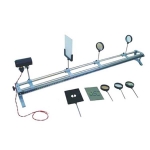
The Scientifc Equipment 3D Standing Wave Machine may include a wave generator, vibration unit, support frame, elastic cord or string, rotating or oscillating mechanism, control unit, power connection, and demonstration accessories depending on product configuration. It is designed for supervised educational and laboratory demonstration use only.
Key Features
- Educational apparatus for demonstrating 3D standing wave patterns.
- Helps students visualize nodes, antinodes, resonance, and harmonic modes.
- Useful for teaching wave motion, vibration, frequency, wavelength, and interference.
- Supports classroom demonstrations of stationary wave formation.
- Can help explain how wave patterns change with frequency and setup adjustment.
- Suitable for school physics labs, college labs, STEM lessons, and teacher training.
- Encourages hands-on observation of wave behavior and resonance principles.
- Useful for connecting wave theory with real visual demonstrations.
- Designed for supervised educational laboratory use.
Product Specifications
|
Product Name |
3D Standing Wave Machine |
|
Brand |
Scientifc Equipment |
|
Product Type |
Educational Wave Motion and Standing Wave Demonstration Apparatus |
|
Application |
Standing Wave Demonstration, Resonance Experiment, Wave Motion Study, Harmonic Pattern Observation, STEM Activity, and Classroom Teaching |
|
Working Principle |
Standing Wave Patterns Are Formed by the Superposition of Waves Traveling in Opposite Directions, Creating Nodes and Antinodes |
|
Possible Components |
Wave Generator, Vibration Unit, Support Frame, Elastic Cord or String, Control Unit, Power Adapter, Rotating or Oscillating Mechanism, and Demonstration Accessories Depending on Product Configuration |
|
Possible Material |
Metal or Plastic Frame, Elastic Cord, Motorized Vibrator, Electrical Components, Control Housing, and Educational-Grade Laboratory Materials Depending on Model Design |
|
Compatible Accessories |
Function Generator, Power Supply, Oscillator, Measuring Scale, Frequency Meter, Support Stand, Clamp, and Physics Wave Demonstration Accessories Depending on Configuration |
|
Educational Use |
Physics Lesson, Wave Mechanics Practical, Standing Wave Observation, Resonance Activity, Harmonics Demonstration, and Student Laboratory Work |
|
Suitable For |
Schools, Colleges, Physics Laboratories, Science Rooms, STEM Labs, Teacher Training Centers, and Educational Institutions |
|
Learning Topics |
Standing Waves, Nodes, Antinodes, Resonance, Harmonics, Frequency, Wavelength, Amplitude, Vibration, Interference, and Wave Motion |
|
Operation |
Manual Setup, Power Connection, Frequency Adjustment, Wave Pattern Observation, Harmonic Mode Demonstration, and Supervised Laboratory Use |
|
Important Note |
For Educational and Laboratory Demonstration Use Only; Size, Power Rating, Frequency Range, Components, Accessories, and Construction Depend on Product Configuration |
How to Use
- Place the 3D Standing Wave Machine on a stable, dry, and clean laboratory bench.
- Check that all supports, cords, connectors, and moving parts are properly fitted and secure.
- Connect the apparatus to the recommended power supply or approved classroom power source.
- Switch on the wave generator or vibration unit according to the instruction manual.
- Start at a low frequency and observe the movement of the cord, string, or wave element.
- Gradually adjust the frequency until a clear standing wave pattern appears.
- Identify the nodes, where little or no movement occurs, and the antinodes, where maximum movement occurs.
- Change the frequency to observe different harmonic modes and 3D wave patterns.
- Record observations such as frequency setting, number of loops, node positions, and wave shape.
- Discuss the relationship between frequency, wavelength, resonance, and standing wave formation.
- Switch off the machine after the demonstration and disconnect the power supply before storage.
Safety and Handling Instructions
- Use only under teacher, laboratory instructor, or trained adult supervision.
- Use only the recommended power source and do not connect to an unsuitable mains supply.
- Keep hands, hair, loose clothing, and small objects away from moving or vibrating parts.
- Do not touch electrical connections with wet hands.
- Do not operate the apparatus near water, chemicals, flames, or unstable surfaces.
- Do not run the machine at excessive speed or frequency beyond the recommended operating range.
- Switch off and disconnect power before adjusting, repairing, cleaning, or storing the apparatus.
- Do not use if wires, cords, plugs, moving parts, or frame components are damaged.
- Ensure the apparatus is placed securely to prevent falling during vibration.
- Store in a clean, dry, and protective place after use.
Educational Applications
- Demonstrating standing wave formation in a clear visual format.
- Teaching nodes and antinodes through practical observation.
- Explaining resonance and harmonic modes in wave systems.
- Studying the relationship between frequency and wavelength.
- Supporting lessons on wave interference and superposition.
- Helping students compare theoretical wave diagrams with real demonstrations.
- Useful for physics practicals, STEM activities, and classroom demonstrations.
- Encouraging observation, measurement, prediction, analysis, and scientific reasoning.
Why Choose Scientifc Equipment 3D Standing Wave Machine?
The Scientifc Equipment 3D Standing Wave Machine provides a practical and visual way to teach wave motion and resonance. It helps students directly observe standing wave patterns, nodes, antinodes, and harmonics, making wave theory easier to understand through supervised hands-on classroom experimentation.
FAQ
- What is the 3D Standing Wave Machine used for?
It is used to demonstrate standing waves, nodes, antinodes, resonance, harmonics, frequency, wavelength, and wave motion in physics lessons.
- Is this machine suitable for school physics laboratories?
Yes, it is suitable for school physics labs, college science labs, STEM classrooms, teacher demonstrations, and supervised student practicals.
- What are nodes and antinodes?
Nodes are points in a standing wave where there is little or no movement, while antinodes are points where the vibration is maximum.
- Can students observe different harmonics?
Yes, by adjusting the frequency or setup conditions, students can observe different standing wave patterns and harmonic modes depending on the machine configuration.
- Does the machine require electricity?
Many models require a power supply or vibration source. Exact power requirements depend on the supplied product configuration and should be checked before use.
- Can students operate it independently?
Students should use the apparatus only under teacher or laboratory instructor supervision, especially when electrical or moving parts are involved.
- What topics can be taught with this apparatus?
It can be used to teach standing waves, resonance, wave interference, superposition, harmonics, frequency, wavelength, amplitude, and vibration.
- How should the 3D Standing Wave Machine be stored?
Store it in a clean, dry, and protective place. Keep cords, frame parts, electrical components, and wave elements safe from moisture, dust, impact, and rough handling.
SEO Keywords
3D Standing Wave Machine, Scientifc Equipment Standing Wave Machine, standing wave apparatus, physics wave demonstration machine, nodes and antinodes apparatus, resonance demonstration equipment, harmonic wave machine, school physics wave apparatus, STEM wave motion equipment, standing wave experiment, classroom wave mechanics apparatus, educational physics wave machine.
SEO Meta Title
3D Standing Wave Machine – Scientifc Equipment Physics Apparatus
SEO Meta Description
Buy 3D Standing Wave Machine by Scientifc Equipment for school physics labs, STEM classrooms, standing wave demonstrations, resonance experiments, nodes and antinodes study, and wave motion learning.
Google E-E-A-T Focused Content
This product content is prepared to support teachers, school buyers, laboratory suppliers, physics educators, science instructors, STEM coordinators, lab technicians, students, and learning institutions with clear product information, practical specifications, usage guidance, safety instructions, and helpful FAQs. The content focuses on accurate educational wave mechanics applications, supervised standing wave demonstrations, safe apparatus handling, resonance learning, harmonic pattern observation, and trustworthy product guidance while clearly stating that the product is for educational and laboratory demonstration use only.

 (1).png)
.jpg)
.jpg)
.jpg)
.jpg)
.jpeg)