
Buzzer in a Vacuum Manufacturer,Supplier and Exporter in India
.jpg)
Product Code : SCL-PLE-11613
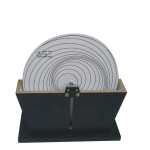
The Buzzer in a Vacuum by Scientifc Equipment is an educational physics laboratory apparatus designed to demonstrate that sound requires a material medium for transmission. It is ideal for school laboratories, college physics labs, STEM classrooms, sound wave demonstrations, teacher-led experiments, and student practical activities.
This apparatus helps students clearly observe how the sound from a buzzer becomes weaker as air is removed from the chamber. It provides a simple and effective demonstration that sound cannot travel through a vacuum because there are no particles available to carry sound vibrations.
Product Description
Buzzer in a Vacuum is commonly used in physics classrooms to explain the nature of sound waves and their dependence on a medium. When the buzzer is switched on inside a sealed chamber, the sound is heard clearly while air is present. As air is gradually removed using a vacuum pump, the sound becomes faint, showing that sound transmission reduces when the medium is removed.
The Scientifc Equipment Buzzer in a Vacuum apparatus is suitable for demonstrating sound propagation, vibration, air as a medium, vacuum effect, and wave transmission. It helps teachers explain an important concept in acoustics through direct observation and hands-on classroom learning.
Key Features
- Educational apparatus for demonstrating that sound requires a medium to travel.
- Shows reduction of buzzer sound when air is removed from the chamber.
- Useful for teaching sound waves, vibration, air medium, and vacuum concepts.
- Suitable for physics practicals, STEM activities, and classroom demonstrations.
- Clear visual and audible experiment for student understanding.
- Can be used with a vacuum chamber, bell jar, buzzer, and pump depending on model design.
- Supports hands-on learning of acoustics and wave behavior.
- Durable educational-grade construction for repeated laboratory use.
- Ideal for schools, colleges, physics labs, STEM labs, and science exhibitions.
Product Specifications
|
Product Name |
Buzzer in a Vacuum |
|
Brand |
Scientifc Equipment |
|
Product Type |
Physics Laboratory Sound Demonstration Apparatus |
|
Application |
Sound Wave Transmission, Vacuum Demonstration, Medium Requirement, and STEM Experiments |
|
Working Principle |
Sound Requires a Material Medium for Transmission and Cannot Travel Through a Perfect Vacuum |
|
Possible Components |
Buzzer Unit, Vacuum Chamber or Bell Jar, Base Plate, Battery Holder, Connecting Leads, Switch, Vacuum Pump Connection, and Sealing Arrangement Depending on Model Design |
|
Power Source |
Suitable Low-Voltage Battery or DC Power Supply Depending on Buzzer Design |
|
Compatible Accessories |
Vacuum Pump, Bell Jar, Rubber Seal, Connecting Tube, Battery, Switch, and Laboratory Stand Accessories Depending on Setup |
|
Educational Use |
Physics Practical, Sound Wave Demonstration, STEM Learning, Classroom Experiment |
|
Suitable For |
Schools, Colleges, Physics Laboratories, STEM Classrooms, Science Projects, and Science Exhibitions |
|
Learning Topics |
Sound Waves, Vibration, Air Medium, Vacuum, Wave Transmission, Acoustics, and Energy Transfer |
|
Operation |
Manual Demonstration Using Buzzer, Vacuum Chamber, and Vacuum Pump |
How to Use
- Place the Buzzer in a Vacuum apparatus on a clean, dry, and stable laboratory table.
- Check that the buzzer, battery or power supply, switch, chamber, and vacuum connection are properly arranged.
- Place the buzzer inside the vacuum chamber or bell jar as per the apparatus design.
- Switch on the buzzer and allow students to hear the sound while air is present in the chamber.
- Connect the vacuum pump to the chamber outlet or base connection.
- Start removing air slowly from the chamber using the vacuum pump.
- Observe how the sound from the buzzer gradually becomes weaker as air is removed.
- Allow air back into the chamber and observe how the buzzer sound becomes louder again.
- Discuss how air particles help carry sound vibrations from the buzzer to the listener.
- After the experiment, switch off the buzzer, disconnect the pump, and store the apparatus safely.
Safety and Handling Instructions
- Use only under the supervision of a teacher or trained laboratory instructor.
- Use a suitable low-voltage battery or recommended DC power source only.
- Do not connect the buzzer directly to high-voltage AC mains power.
- Check the bell jar or chamber for cracks before creating a vacuum.
- Do not apply excessive vacuum pressure beyond the recommended limit of the apparatus.
- Handle glass chambers, seals, and vacuum tubes carefully to avoid breakage.
- Release vacuum slowly before opening the chamber.
- Keep electrical parts away from water and moisture.
- Store the apparatus in a clean, dry, and safe place after use.
Educational Applications
- Demonstration that sound requires a medium to travel.
- Study of sound wave transmission through air.
- Observation of reduced sound intensity in low-pressure conditions.
- Understanding why sound cannot travel through a vacuum.
- Introduction to vibration, acoustics, and wave energy transfer.
- Useful for physics practicals, STEM projects, classroom demonstrations, and science exhibitions.
- Helps students connect sound theory with real laboratory observation.
Why Choose Scientifc Equipment Buzzer in a Vacuum?
The Scientifc Equipment Buzzer in a Vacuum is designed to make sound wave concepts simple, practical, and easy to observe. It helps teachers demonstrate that sound needs a material medium for transmission, while students gain hands-on experience with air, vacuum, vibration, and wave propagation in a controlled laboratory setup.
FAQ
- What is Buzzer in a Vacuum used for?
Buzzer in a Vacuum is used to demonstrate that sound requires a material medium such as air to travel and cannot travel through a perfect vacuum.
- Is this apparatus suitable for school laboratories?
Yes, it is suitable for school physics labs, college laboratories, STEM classrooms, sound wave demonstrations, science projects, and teacher-led practical activities.
- What happens when air is removed from the chamber?
As air is removed from the chamber, the sound from the buzzer becomes weaker because fewer air particles are available to transmit sound vibrations.
- Why can sound not travel through a vacuum?
Sound is a mechanical wave and needs particles of a medium to carry vibrations. In a vacuum, there are no particles to transfer the sound energy.
- What accessories may be required with this apparatus?
A vacuum pump, bell jar or vacuum chamber, connecting tube, battery or low-voltage power supply, switch, and sealing arrangement may be required depending on the model design.
- Can students perform this experiment directly?
Students can observe and participate in the experiment under teacher supervision, but vacuum pump operation and chamber handling should be done carefully by a trained instructor.
- How should the apparatus be stored after use?
After use, switch off the buzzer, disconnect the power source and pump, release the vacuum safely, clean the parts if needed, and store the apparatus in a clean, dry, and safe place.
SEO Keywords
Buzzer in a Vacuum, Scientifc Equipment Buzzer in a Vacuum, sound in vacuum apparatus, physics lab sound demonstration, sound needs medium experiment, vacuum bell jar buzzer apparatus, sound wave transmission kit, acoustics demonstration apparatus, STEM sound experiment kit, school physics lab equipment, educational science equipment.
SEO Meta Title
Buzzer in a Vacuum – Scientifc Equipment Sound Wave Demonstration Apparatus
SEO Meta Description
Buy Buzzer in a Vacuum by Scientifc Equipment for physics labs, STEM classrooms, and sound wave demonstrations. Ideal for teaching that sound requires a medium, sound cannot travel through vacuum, vibration, air medium, wave transmission, and acoustics concepts.
Google E-E-A-T Focused Content
This product content is prepared to support teachers, laboratory suppliers, educational institutions, STEM coordinators, students, physics learners, and science buyers with clear product information, practical specifications, usage guidance, safety instructions, and helpful FAQs. The content focuses on accurate sound wave concepts, real classroom applications, safe vacuum demonstration practices, and trustworthy educational value to improve product clarity, search visibility, and user confidence.

 (1).png)
.jpg)
.jpg)
.jpg)
.jpg)
.jpg)