
Graphite Crystal Model Manufacturer,Supplier and Exporter in India
.jpg)
Product Code : SCL-BM-11625
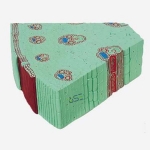
The Graphite Crystal Model by Scientifc Equipment is an educational chemistry and material science teaching model designed to demonstrate the atomic arrangement, covalent bonding, layered structure, hexagonal lattice, and three-dimensional crystal structure of graphite. It is ideal for school laboratories, college chemistry labs, physics classrooms, STEM education, teacher demonstrations, and student learning activities.
This model helps students visualize how carbon atoms are arranged in flat hexagonal layers in graphite. It supports clear understanding of graphite’s softness, electrical conductivity, layered structure, covalent bonding, and comparison with other carbon allotropes such as diamond.
Product Description
A Graphite Crystal Model is used to explain the internal structure of graphite at the atomic level. In graphite, each carbon atom is covalently bonded to three other carbon atoms in a hexagonal arrangement, forming flat layers. These layers are held together by weak forces, allowing them to slide over each other easily.
The Scientifc Equipment Graphite Crystal Model provides a practical and visual way to teach crystal chemistry, carbon allotropes, bonding, molecular geometry, layered structures, solid-state chemistry, and material properties. It helps students connect the structure of graphite with its real-life uses in pencils, electrodes, lubricants, and conductive materials.
Key Features
- Educational model for demonstrating the crystal structure of graphite.
- Shows hexagonal arrangement of carbon atoms in layered sheets.
- Helps explain covalent bonding and weak forces between layers.
- Useful for comparing graphite with diamond and other carbon allotropes.
- Supports chemistry, physics, material science, mineralogy, and STEM learning.
- Clear three-dimensional visual aid for classroom and laboratory demonstrations.
- Helps students understand structure-property relationships in carbon materials.
- Durable educational-grade construction for repeated classroom use.
- Suitable for schools, colleges, chemistry labs, physics labs, STEM classrooms, and science exhibitions.
Product Specifications
|
Product Name |
Graphite Crystal Model |
|
Brand |
Scientifc Equipment |
|
Product Type |
Educational Chemistry and Crystal Structure Model |
|
Model Representation |
Three-Dimensional Graphite Crystal Lattice |
|
Element Represented |
Carbon |
|
Bonding Type |
Covalent Bonding Within Layers and Weak Interlayer Forces Between Layers |
|
Crystal Arrangement |
Layered Hexagonal Carbon Structure |
|
Application |
Chemistry, Carbon Allotropes, Crystal Structure, Covalent Bonding, Solid-State Chemistry, Material Science, and STEM Demonstrations |
|
Working Principle |
Visual Representation of Carbon Atoms Arranged in Hexagonal Layers in Graphite |
|
Possible Components |
Atom Balls, Bond Connectors, Layered Support Frame, Base Stand, and Model Assembly Parts Depending on Model Design |
|
Educational Use |
Chemistry Practical, Molecular Structure Demonstration, Crystal Lattice Study, STEM Learning |
|
Suitable For |
Schools, Colleges, Chemistry Laboratories, Physics Laboratories, STEM Classrooms, Science Projects, and Exhibitions |
|
Learning Topics |
Graphite Structure, Carbon Allotropes, Covalent Bonding, Hexagonal Lattice, Layered Structure, Electrical Conductivity, and Material Properties |
|
Operation |
Manual Demonstration and Observation-Based Learning |
How to Use
- Place the Graphite Crystal Model on a clean, flat, and stable classroom or laboratory table.
- Identify the atom balls representing carbon atoms and the connectors representing covalent bonds.
- Observe the hexagonal arrangement of carbon atoms within each layer.
- Explain how each carbon atom bonds with three neighbouring carbon atoms in a flat sheet.
- Show the layered arrangement and discuss how weak forces between layers allow them to slide.
- Use the model to explain why graphite is soft and useful as a lubricant.
- Discuss how free or delocalized electrons help graphite conduct electricity.
- Compare the graphite model with a diamond crystal model, if available, to explain differences in bonding and properties.
- Ask students to draw the graphite structure or identify layers, bonds, and carbon atoms from the model.
- After use, clean the model gently and store it safely to prevent damage.
Safety and Handling Instructions
- Use under teacher or laboratory instructor supervision during student activities.
- Handle the model carefully to avoid breaking connectors or small parts.
- Do not apply excessive force while assembling, lifting, or disassembling the model.
- Keep small detachable parts away from very young children.
- Clean with a soft, dry cloth only.
- Keep away from heat, moisture, chemicals, and sharp objects.
- Store the model in a clean, dry, and safe place after use.
Educational Applications
- Demonstration of graphite crystal lattice structure.
- Study of carbon atom arrangement in graphite.
- Explanation of covalent bonding in hexagonal carbon layers.
- Understanding weak interlayer forces and layered structure.
- Comparison of graphite and diamond structures.
- Teaching structure-property relationships such as softness and electrical conductivity.
- Useful for solid-state chemistry, molecular geometry, mineralogy, material science, and STEM lessons.
- Suitable for chemistry practicals, classroom demonstrations, science fairs, and laboratory teaching.
Why Choose Scientifc Equipment Graphite Crystal Model?
The Scientifc Equipment Graphite Crystal Model is designed to make crystal structure and carbon bonding concepts simple, visual, and easy to understand. It helps teachers explain graphite’s layered hexagonal structure clearly while students gain hands-on understanding of carbon allotropes, covalent bonding, electrical conductivity, softness, and structure-property relationships.
FAQ
- What is a Graphite Crystal Model used for?
A Graphite Crystal Model is used to demonstrate the atomic arrangement of carbon atoms in graphite and to explain covalent bonding, hexagonal layers, crystal structure, and material properties.
- Is this model suitable for school laboratories?
Yes, it is suitable for school chemistry labs, college laboratories, physics classrooms, STEM labs, science projects, and teacher-led demonstrations.
- What does the graphite model show?
The model shows carbon atoms arranged in flat hexagonal layers. These layers are stacked over one another and held together by weak interlayer forces.
- Why is graphite soft?
Graphite is soft because its carbon layers can slide over one another easily due to weak forces between the layers.
- Why does graphite conduct electricity?
Graphite conducts electricity because it has delocalized electrons that can move through the layered structure and carry electric charge.
- Can this model be used to compare graphite and diamond?
Yes, the model is useful for comparing graphite with diamond and explaining how different carbon atom arrangements produce different physical properties.
- How should the Graphite Crystal Model be stored?
After use, clean the model gently, avoid bending or forcing the connectors, and store it in a clean, dry, and safe place to prevent damage or loss of parts.
SEO Keywords
Graphite Crystal Model, Scientifc Equipment Graphite Crystal Model, graphite structure model, carbon crystal lattice model, chemistry crystal model, carbon allotrope model, hexagonal carbon lattice model, covalent bonding model, solid state chemistry model, school chemistry lab model, STEM molecular model, educational science equipment.
SEO Meta Title
Graphite Crystal Model – Scientifc Equipment Carbon Lattice Teaching Model
SEO Meta Description
Buy Graphite Crystal Model by Scientifc Equipment for chemistry labs, STEM classrooms, and science demonstrations. Ideal for teaching carbon allotropes, graphite lattice structure, hexagonal layers, covalent bonding, electrical conductivity, softness, and solid-state chemistry.
Google E-E-A-T Focused Content
This product content is prepared to support teachers, laboratory suppliers, educational institutions, STEM coordinators, students, chemistry learners, and science buyers with clear product information, practical specifications, usage guidance, safety instructions, and helpful FAQs. The content focuses on accurate graphite crystal structure concepts, real classroom applications, safe model handling, and trustworthy educational value to improve product clarity, search visibility, and user confidence.

 (1).png)
.jpg)


.jpg)
