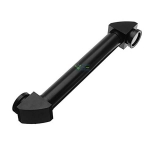
Periscope Classroom Kit Manufacturer,Supplier and Exporter in India
.jpg)
Product Code : SCL-PLE-11921
The Periscope Classroom Kit by Scientifc Equipment is an educational optics and STEM activity kit designed to help students understand reflection of light, plane mirrors, image formation, ray paths, angle of incidence, angle of reflection, and practical optical instrument design. It is suitable for school science classrooms, physics laboratories, STEM labs, teacher-led demonstrations, science exhibitions, and supervised student project activities.
This kit allows students to build or investigate a simple periscope using mirrors positioned at suitable angles. It provides a hands-on way to learn how light can be redirected to see objects from a different position, making optics concepts easier to understand through practical classroom learning.
Product Description
A periscope is an optical device that uses mirrors or prisms to reflect light from one opening to another, allowing the viewer to see over, around, or beyond an obstacle. The Periscope Classroom Kit helps students explore how two plane mirrors arranged at approximately 45 degrees can redirect light and form an upright view of an object.
The Scientifc Equipment Periscope Classroom Kit may include periscope body parts, mirror pieces, viewing windows, assembly panels, adhesive strips, ruler markings, activity sheet, instruction guide, and project accessories depending on product configuration. It is designed for supervised educational classroom and laboratory demonstration use only.
Key Features
- Educational classroom kit for building and studying a simple periscope.
- Helps demonstrate reflection of light using plane mirrors.
- Useful for teaching angle of incidence, angle of reflection, and ray direction.
- Supports hands-on STEM activities and optics project work.
- May include mirrors, body panels, viewing openings, and activity guide depending on configuration.
- Suitable for physics, general science, engineering basics, and classroom demonstrations.
- Encourages observation, assembly, alignment, prediction, testing, and scientific reasoning.
- Ideal for teacher-led demonstrations and supervised student group activities.
- Designed for educational classroom use only.
Product Specifications
|
Product Name |
Periscope Classroom Kit |
|
Brand |
Scientifc Equipment |
|
Product Type |
Educational Optics and Periscope Model Classroom Kit |
|
Application |
Reflection Demonstration, Periscope Construction, Ray Optics Activity, STEM Project, Science Exhibition, and Classroom Teaching |
|
Working Principle |
Light from an Object Reflects from One Plane Mirror to Another, Redirecting the Ray Path to the Viewer’s Eye |
|
Possible Components |
Periscope Body Panels, Plane Mirrors, Mirror Holders, Viewing Windows, Adhesive Strips, Assembly Accessories, Activity Sheet, Instruction Guide, and Storage Packaging Depending on Product Configuration |
|
Possible Material |
Cardboard, Plastic, Acrylic, Paperboard, Glass Mirror, Acrylic Mirror, Adhesive Tape, Plastic Connectors, and Educational-Grade Classroom Materials Depending on Model Design |
|
Mirror Type |
Plane Mirrors or Model-Specific Reflective Mirrors Depending on Product Configuration |
|
Demonstration Type |
Reflection of Light, Mirror Alignment, Ray Path Redirection, Image Viewing, Optical Instrument Model, and Periscope Function Demonstration |
|
Measurement Type |
Mirror Angle, Ray Direction, Object Position, Viewing Alignment, Image Observation, and Qualitative Reflection Study |
|
Power Requirement |
No Electrical Power Required |
|
Compatible Accessories |
Light Box, Ray Box, Flashlight, Ruler, Protractor, Pencil, Activity Sheet, Graph Paper, Geometry Set, and Science Practical Notebook |
|
Educational Use |
Physics Lesson, Optics Activity, STEM Project, Classroom Model Making, Science Fair Demonstration, and Student Practical Work |
|
Suitable For |
Schools, Science Classrooms, Physics Laboratories, STEM Labs, Teacher Training Centers, Science Clubs, and Educational Institutions |
|
Learning Topics |
Reflection, Plane Mirrors, Ray Optics, Image Formation, Angle of Incidence, Angle of Reflection, Optical Instruments, Periscope Design, and Light Path |
|
Operation |
Manual Assembly, Mirror Placement, Angle Alignment, Object Viewing, Ray Observation, Result Recording, Discussion, and Supervised Classroom Activity |
|
Important Note |
For Educational and Classroom Demonstration Use Only; Kit Contents, Mirror Size, Body Material, Assembly Method, Accessories, and Model Design Depend on Product Configuration |
How to Use
- Open the Periscope Classroom Kit and arrange all components on a clean, dry, and stable work surface.
- Inspect the mirrors, body panels, viewing openings, connectors, adhesive strips, and activity guide before use.
- Assemble the periscope body according to the supplied instructions or teacher’s lesson plan.
- Place the first mirror near the top opening at the recommended angle, commonly around 45 degrees.
- Place the second mirror near the lower viewing opening at a matching angle.
- Secure the mirrors carefully so that they remain aligned during observation.
- Look through the lower viewing opening and aim the upper opening toward an object.
- Adjust mirror alignment if the object image is not clear.
- Use a ray diagram to trace how light reflects from the upper mirror to the lower mirror.
- Compare the periscope view with direct viewing and discuss how reflection redirects light.
- Record observations, diagrams, and conclusions in a science notebook.
- After use, clean the mirrors gently if required and store the kit safely.
Safety and Handling Instructions
- Use only under teacher, laboratory instructor, or trained adult supervision.
- Handle mirrors carefully to avoid scratches, cracks, or breakage.
- Do not press hard on mirror surfaces or sharp edges.
- If glass mirrors are supplied, handle them with extra care and do not use broken or chipped pieces.
- Keep small connectors, mirror pieces, and detachable parts away from very young children.
- Do not point the periscope toward the sun or very bright light sources.
- If using a flashlight, ray box, or light box, do not shine bright light directly into eyes.
- Use scissors, cutters, or sharp tools only under adult supervision if the activity requires cutting.
- Keep the kit away from water, chemical spills, heat, flames, and rough handling.
- Store all components in a clean, dry, and protective place after use.
Educational Applications
- Building a working periscope model in the classroom.
- Demonstrating reflection of light using plane mirrors.
- Teaching angle of incidence and angle of reflection.
- Explaining how optical instruments redirect light paths.
- Studying image position and mirror alignment.
- Supporting STEM model-making and engineering design activities.
- Useful for science fairs, optics lessons, and classroom demonstrations.
- Encouraging observation, construction, alignment, ray tracing, comparison, and scientific reasoning.
Why Choose Scientifc Equipment Periscope Classroom Kit?
The Scientifc Equipment Periscope Classroom Kit provides a practical and engaging way to teach reflection and ray optics. By allowing students to build and test a working periscope, the kit makes mirror reflection, light path redirection, and optical instrument design easier to understand through supervised hands-on classroom learning.
FAQ
- What is the Periscope Classroom Kit used for?
It is used to build and study a simple periscope while demonstrating reflection of light, plane mirrors, ray paths, and image viewing.
- Is this kit suitable for school science classrooms?
Yes, it is suitable for school science classrooms, physics labs, STEM labs, optics lessons, science exhibitions, and supervised student activities.
- What principle does a periscope use?
A periscope works on the principle of reflection, using two plane mirrors to redirect light from the object to the viewer’s eye.
- Does the Periscope Classroom Kit require electricity?
No, the kit does not require electricity. A flashlight, ray box, or light box may be used optionally for ray demonstration activities.
- What angle are the mirrors usually placed at?
In a basic periscope, the mirrors are commonly placed at approximately 45 degrees so that light is reflected from one mirror to the other.
- Can students assemble the periscope themselves?
Yes, students can assemble it under teacher supervision by following the instruction guide and carefully aligning the mirror positions.
- Can this kit be used for STEM projects?
Yes, it is useful for STEM projects involving optics, model-making, engineering design, mirror alignment, and light path investigation.
- How should the Periscope Classroom Kit be stored?
Store the mirrors, body parts, connectors, activity sheets, and accessories in a clean, dry, and protective place away from moisture, heat, dust, scratches, and rough handling.
SEO Keywords
Periscope Classroom Kit, Scientifc Equipment Periscope Classroom Kit, educational periscope kit, school physics periscope model, reflection of light kit, plane mirror optics kit, STEM periscope project, ray optics classroom kit, mirror reflection activity, periscope science model, optical instrument teaching aid, physics lab periscope kit.
SEO Meta Title
Periscope Classroom Kit – Scientifc Equipment
SEO Meta Description
Buy Periscope Classroom Kit by Scientifc Equipment for school science classrooms, reflection of light lessons, plane mirror activities, ray optics experiments, STEM model-making, and supervised classroom learning.
Google E-E-A-T Focused Content
This product content is prepared to support teachers, school buyers, laboratory suppliers, physics educators, STEM coordinators, science instructors, students, and educational institutions with clear product information, practical specifications, usage guidance, safety instructions, and helpful FAQs. The content focuses on accurate educational optics applications, supervised periscope construction, safe handling of mirrors and classroom tools, reflection learning, ray path observation, optical instrument design, and trustworthy product guidance while clearly stating that the product is for educational classroom use only.
.jpg)
 (1).png)
.jpg)
.jpg)
 (1).png)
 (1).png)
.jpg)