
Timer Millisecond Manufacturer,Supplier and Exporter in India
.jpg)
Product Code : SCL-PLE-11784
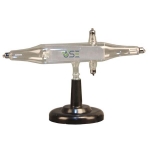
The Timer Millisecond by Scientifc Equipment is an educational physics laboratory timing instrument designed to measure very short time intervals in milliseconds for mechanics, motion, freefall, pendulum, vibration, reaction time, and electronic timing experiments. It is suitable for school physics laboratories, college science labs, STEM classrooms, mechanics practicals, and teacher demonstrations.
This millisecond timer helps students record small time intervals with better precision than ordinary manual timing methods. It supports practical learning of motion, velocity, acceleration, frequency, time period, freefall, oscillation, and experimental measurement in a clear laboratory format.
Product Description
A Millisecond Timer is commonly used in physics and science laboratories where fast events need accurate timing. It can be used with compatible switches, photogates, ticker timers, freefall apparatus, vibration experiments, or other timing accessories depending on product configuration.
The Scientifc Equipment Timer Millisecond may include a digital display, start-stop controls, reset button, external sensor input, photogate input, trigger terminals, power input, and durable laboratory housing depending on product configuration. It is designed for supervised educational and laboratory use only.
Key Features
- Millisecond timing instrument for physics and science experiments.
- Designed to measure short time intervals with improved accuracy.
- Useful for motion, freefall, pendulum, vibration, and reaction time experiments.
- May support external switches, photogates, sensors, or trigger inputs depending on model configuration.
- Digital display helps students observe and record time readings clearly.
- Suitable for school, college, mechanics, and STEM laboratory practicals.
- Helps demonstrate velocity, acceleration, frequency, time period, and timing measurement.
- Compact and practical design for repeated educational laboratory use.
- Designed for supervised classroom and laboratory applications.
Product Specifications
|
Product Name |
Timer Millisecond |
|
Brand |
Scientifc Equipment |
|
Product Type |
Educational Digital Millisecond Laboratory Timer |
|
Application |
Physics Timing Experiments, Mechanics Practical, Motion Study, Freefall Measurement, Oscillation Timing, STEM Learning, and Laboratory Demonstration |
|
Working Principle |
Measures Short Time Intervals in Milliseconds Using Manual Start-Stop Control, Sensor Input, Switch Trigger, or Photo Gate Signal Depending on Product Configuration |
|
Possible Measurement Range |
Millisecond-Level Time Measurement Depending on Timer Resolution and Model Design |
|
Possible Components |
Digital Timer Unit, Display Panel, Start Button, Stop Button, Reset Button, Input Terminals, Sensor Connection, Power Cable, and Laboratory Housing Depending on Product Configuration |
|
Possible Material |
ABS or Metal Cabinet, Electronic Timer Circuit, Digital Display, Insulated Terminals, Switches, and Laboratory-Grade Electrical Components |
|
Display Type |
Digital Time Display Depending on Timer Configuration |
|
Possible Controls |
Start, Stop, Reset, Mode Selection, Sensor Input, Trigger Input, and External Timing Connection Depending on Model Design |
|
Compatible Accessories |
Photo Gates, Freefall Apparatus, Reaction Time Switches, Pendulum Setup, Motion Track, Connecting Leads, Sensors, and Physics Timing Accessories Depending on Compatibility |
|
Educational Use |
Motion Timing, Freefall Experiment, Pendulum Time Period Study, Velocity Measurement, Acceleration Calculation, Reaction Time Activity, and Student Laboratory Work |
|
Suitable For |
Schools, Colleges, Physics Laboratories, Mechanics Labs, STEM Labs, Teacher Training Centers, Technical Institutes, and Educational Institutions |
|
Learning Topics |
Time Measurement, Millisecond Timing, Motion, Velocity, Acceleration, Freefall, Oscillation, Frequency, Time Period, Experimental Error, and Data Analysis |
|
Operation |
Manual or Sensor-Based Time Measurement, Digital Reading Observation, Reset Function, Experiment Recording, and Supervised Laboratory Use |
|
Important Note |
For Educational and Laboratory Use Only; Timer Resolution, Measurement Range, Display Type, Power Requirement, Sensor Compatibility, and Accessories Depend on Product Configuration |
How to Use
- Place the Timer Millisecond on a stable, dry, and well-ventilated laboratory bench.
- Inspect the timer unit, display, buttons, terminals, sensors, and connecting leads before use.
- Connect the timer to the recommended power source or batteries depending on product configuration.
- Connect compatible switches, photogates, or sensors if the experiment requires external triggering.
- Select the required timing mode, if mode selection is available on the model.
- Press reset to clear previous readings before starting the experiment.
- Start the timing manually or allow the external sensor to trigger the start signal.
- Stop the timer manually or allow the connected sensor to stop timing according to the experiment setup.
- Record the millisecond reading shown on the digital display.
- Repeat the experiment for multiple trials and calculate average time values.
- Use the recorded time data to calculate velocity, acceleration, time period, or frequency as required.
- Switch off the timer and store all accessories safely after use.
Safety and Handling Instructions
- Use only under teacher, laboratory instructor, or trained adult supervision.
- Use only the recommended power supply, batteries, sensors, and connecting leads.
- Do not operate the timer with wet hands or near water.
- Do not connect external devices that exceed the timer input rating.
- Check wires, terminals, and sensors before every experiment.
- Do not pull or twist sensor cables and connecting leads.
- Keep the timer away from moisture, chemicals, direct heat, dust, and rough handling.
- Switch off and disconnect the timer before cleaning, moving, or storing.
- Use a soft dry cloth for cleaning the display and outer surface.
- If abnormal display, heating, loose wiring, or sensor failure occurs, stop use immediately and consult a qualified technician.
Educational Applications
- Measuring short time intervals in physics experiments.
- Studying freefall, acceleration, speed, and velocity.
- Timing pendulum oscillations and vibration experiments.
- Supporting photogate and sensor-based motion activities.
- Helping students compare manual timing and electronic timing accuracy.
- Useful for reaction time experiments and mechanics demonstrations.
- Encouraging data recording, graph plotting, calculation, and error analysis.
- Supporting STEM learning through precise measurement and practical observation.
Why Choose Scientifc Equipment Timer Millisecond?
The Scientifc Equipment Timer Millisecond provides a practical and accurate timing solution for educational physics laboratories. It helps teachers and students measure short time intervals, collect experimental data, and understand motion, acceleration, oscillation, and timing concepts through hands-on practical work.
FAQ
- What is the Timer Millisecond used for?
The Timer Millisecond is used to measure short time intervals in physics experiments such as motion study, freefall, pendulum timing, reaction time, vibration, and acceleration measurement.
- Is this timer suitable for school physics laboratories?
Yes, it is suitable for school physics labs, college mechanics labs, STEM classrooms, teacher demonstrations, and supervised student practicals.
- Can this timer be used with photo gates?
Some configurations may support photogate or external sensor connections. Compatibility depends on the supplied timer model and input design.
- What does millisecond timing mean?
Millisecond timing means the timer can measure time intervals in thousandths of a second, depending on its resolution and product configuration.
- Can it be used for freefall experiments?
Yes, it can be used for freefall timing when connected with suitable release switches, photogates, or compatible freefall apparatus, depending on model configuration.
- Does it have a digital display?
Yes, it is generally designed with a digital display for clear reading of time values. Exact display type and resolution depend on the supplied model.
- Can students operate this timer independently?
Students should use the timer only under teacher or laboratory instructor supervision after learning correct setup, timing procedure, and safe handling practices.
- How should the Timer Millisecond be stored?
Store the timer, cables, sensors, and accessories in a clean, dry, and safe cabinet. Keep the display, terminals, and cables protected from dust, moisture, impact, and rough handling.
SEO Keywords
Timer Millisecond, Scientifc Equipment Timer Millisecond, millisecond timer, digital millisecond timer, physics lab timer, electronic timer for physics lab, motion experiment timer, freefall timer, photogate compatible timer, school physics timing equipment, STEM lab timer, mechanics experiment timer.
SEO Meta Title
Timer Millisecond – Scientifc Equipment Digital Physics Timer
SEO Meta Description
Buy Timer Millisecond by Scientifc Equipment for school physics labs, freefall experiments, motion study, pendulum timing, reaction time activities, mechanics practicals, and STEM laboratory learning.
Google E-E-A-T Focused Content
This product content is prepared to support teachers, school buyers, laboratory suppliers, physics educators, mechanics instructors, STEM coordinators, technical trainers, students, and learning institutions with clear product information, practical specifications, usage guidance, safety instructions, and helpful FAQs. The content focuses on accurate educational laboratory applications, supervised mechanics experimentation, safe electronic timer handling, millisecond timing support, motion data analysis, and trustworthy product guidance while clearly stating that the product is for educational and laboratory use only.

.jpeg)
.jpg)
 (1).png)
.jpg)
.jpg)
.jpg)