
Acrylic Lenses Manufacturer,Supplier and Exporter in India
.jpg)
Product Code : SCL-PLE-11456
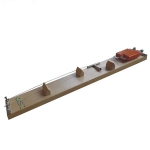
Scientifc Equipment Acrylic Lenses are educational optics laboratory components designed to demonstrate refraction, focal length, image formation, magnification, convergence, divergence, and light ray behaviour. They are suitable for school science laboratories, college physics labs, STEM classrooms, optics practicals, and teacher-led demonstrations.
These acrylic lenses help students understand how light bends when passing through transparent curved surfaces. They are commonly used to study convex lenses, concave lenses, focal points, real and virtual images, magnified and reduced images, and practical applications of lenses in cameras, spectacles, microscopes, telescopes, and optical instruments.
Product Description
The Acrylic Lenses by Scientifc Equipment are practical optics teaching aids used for classroom experiments on light and image formation. The lenses are generally made from clear acrylic material, making them lightweight, easy to handle, and suitable for repeated supervised educational use.
Depending on the supplied configuration, the set may include convex lenses, concave lenses, double convex lenses, double concave lenses, plano-convex lenses, plano-concave lenses, or other acrylic lens types. Students can use these lenses with a ray box, optical bench, screen, light source, lens holder, graph sheet, or object pin to observe how lenses bend light and form images.
Scientifc Equipment Acrylic Lenses are useful for teaching refraction, focal length, lens power, image distance, object distance, magnification, ray diagrams, optical instruments, and STEM-based optics learning.
Key Features
- Brand: Scientifc Equipment
- Acrylic Optical Construction: Lightweight and suitable for classroom optics experiments.
- Convex and Concave Lens Study: Helps demonstrate converging and diverging behaviour of light.
- Clear Refraction Demonstration: Shows how lenses bend light rays through curved surfaces.
- Image Formation Learning: Useful for observing real, virtual, magnified, reduced, erect, and inverted images.
- Physics Lab Suitable: Ideal for optics, refraction, focal length, and ray tracing practicals.
- Reusable Educational Lenses: Suitable for repeated supervised classroom and laboratory use.
- STEM Learning Tool: Helps students connect textbook optics diagrams with real visual experiments.
Product Specifications
|
Product Name |
Acrylic Lenses |
|
Brand |
Scientifc Equipment |
|
Product Type |
Educational optics and refraction lens set |
|
Material |
Clear acrylic or suitable transparent optical material as per supplied model configuration |
|
Lens Types |
Convex lens, concave lens, double convex lens, double concave lens, plano-convex lens, plano-concave lens, or other types as per supplied configuration |
|
Primary Use |
Demonstrating refraction, focal length, lens power, ray tracing, and image formation |
|
Working Principle |
Light bends when passing through curved acrylic lens surfaces, causing rays to converge or diverge depending on lens type |
|
Optical Behaviour |
Converging, diverging, magnifying, reducing, and image-forming action as per lens type |
|
Compatible Accessories |
Ray box, light source, optical bench, lens holder, screen, graph sheet, protractor, object pin, image pin, and laboratory worksheet |
|
Subject Use |
Physics, optics, light, refraction, image formation, general science, and STEM education |
|
Demonstration Topics |
Refraction, focal length, lens power, convex lens, concave lens, ray diagrams, image formation, magnification, and optical instruments |
|
Application |
Classroom demonstrations, school practicals, college physics labs, optics experiments, STEM activities, and science projects |
|
Suitable For |
Schools, colleges, physics laboratories, science laboratories, STEM labs, optics labs, and educational institutions |
|
Usage Mode |
Teacher-led demonstration and supervised student practical use |
|
Packaging |
Standard educational laboratory supply packaging or protective storage box as per supplied configuration |
How to Use Acrylic Lenses
- Place the Acrylic Lenses on a clean, dry, and stable laboratory table.
- Select the required lens according to the experiment, such as convex or concave lens.
- Handle the lens carefully from the edges to avoid fingerprints, scratches, or damage to the optical surfaces.
- Fix the lens in a suitable lens holder or place it carefully on the optical bench.
- Set up a ray box, light source, object pin, or illuminated object as per the experiment requirement.
- Direct light rays through the lens and observe whether they converge or diverge.
- Use a screen to locate the image formed by a convex lens, if required.
- Measure object distance, image distance, and focal length using a scale or optical bench.
- Draw ray diagrams and record observations such as image size, position, nature, and orientation.
- Repeat the experiment with different lenses to compare focal length and image behaviour.
- After use, clean the lenses gently with a soft cloth and store them safely in the box.
Educational Applications
- Demonstrating refraction through lenses
- Studying convex and concave lens behaviour
- Finding focal length of lenses
- Understanding real and virtual image formation
- Teaching magnification and reduction of images
- Preparing ray diagrams for optics practicals
- Explaining lens power and optical correction
- Supporting lessons on spectacles, cameras, microscopes, telescopes, and projectors
- Helping students connect lens theory with hands-on optics experiments
Why Choose Scientifc Equipment Acrylic Lenses?
Scientifc Equipment provides practical educational science apparatus for schools, colleges, STEM labs, and institutional laboratory setups. Acrylic Lenses help students understand refraction, focal length, and image formation through clear, simple, and hands-on optics experiments.
- Suitable for school and college physics laboratories
- Useful for optics, refraction, focal length, and image formation experiments
- Lightweight acrylic design supports easy classroom handling
- Compatible with common optics lab accessories and light sources
- Supports observation-based STEM learning
- Reusable lenses suitable for repeated supervised practical work
- Suitable for institutional procurement and science lab setup
E-E-A-T Product Trust Notes
- Educational Experience: Designed for repeated classroom use in optics, lens, and refraction experiments.
- Practical Expertise: Supports standard physics concepts such as focal length, image formation, lens power, and ray tracing.
- Authoritative Lab Use: Suitable for school, college, STEM, physics, and optics laboratory practicals.
- Trustworthy Learning: Encourages safe, supervised, observation-based experiments with clear visual outcomes.
Care and Safety Instructions
- Use Acrylic Lenses only under teacher or laboratory instructor supervision.
- Handle lenses carefully to avoid scratches, cracks, chips, or surface damage.
- Do not drop the lenses or place heavy objects on them.
- Do not look directly at the Sun or strong light through any lens.
- Use only suitable classroom light sources for experiments.
- Clean lenses with a soft dry cloth or suitable lens cleaning cloth.
- Keep lenses away from dust, moisture, corrosive chemicals, and excessive heat.
- Store lenses in a protective box or laboratory cabinet after use.
- Do not use scratched, cracked, or damaged lenses in classroom experiments.
- Keep small optical parts away from very young children unless supervised.
SEO Title
Acrylic Lenses for School Physics Optics Lab – Scientifc Equipment
Meta Description
Buy Scientifc Equipment Acrylic Lenses for school physics labs, STEM classrooms, optics experiments, refraction demonstrations, focal length study, image formation, convex lens, concave lens, and ray tracing practicals.
SEO Keywords
Acrylic Lenses, Scientifc Equipment Acrylic Lenses, School Lab Acrylic Lenses, Physics Lab Lens Set, Optics Acrylic Lens, Convex Acrylic Lens, Concave Acrylic Lens, Refraction Lens Set, Ray Tracing Lenses, STEM Optics Equipment.
FAQ – Acrylic Lenses
- What are Acrylic Lenses used for?
Acrylic Lenses are used to demonstrate refraction, focal length, image formation, magnification, lens power, and ray tracing in optics experiments.
- Are Acrylic Lenses suitable for school laboratories?
Yes, Scientifc Equipment Acrylic Lenses are suitable for school science labs, college physics labs, STEM classrooms, optics practicals, and supervised student experiments.
- Which lens types may be included?
The set may include convex lenses, concave lenses, double convex lenses, double concave lenses, plano-convex lenses, plano-concave lenses, or other lens types as per supplied configuration.
- Which physics concepts can be taught using Acrylic Lenses?
They can be used to teach refraction, focal length, image formation, lens power, magnification, convergence, divergence, and optical instrument principles.
- Can Acrylic Lenses be used with a ray box?
Yes, Acrylic Lenses can be used with a ray box or suitable light source to observe how light rays converge or diverge after passing through lenses.
- Can these lenses demonstrate real and virtual images?
Yes, convex and concave lenses can be used to explain real images, virtual images, magnified images, reduced images, and image orientation depending on the setup.
- Do Acrylic Lenses require electricity?
The lenses themselves do not require electricity. A ray box or light source used with the lenses may require power depending on the experiment setup.
- Can students use Acrylic Lenses directly?
Students can use the lenses under teacher or laboratory instructor supervision after learning correct handling and optical safety methods.
- What accessories are useful with Acrylic Lenses?
Useful accessories include a ray box, light source, optical bench, lens holder, screen, graph sheet, protractor, object pin, image pin, and practical worksheet.
- Can Acrylic Lenses help explain spectacles and eye defects?
Yes, convex and concave lenses can help explain how spectacles correct common vision defects such as myopia and hypermetropia.
- What safety precautions should be followed?
Handle lenses carefully, avoid looking at the Sun through them, protect them from scratches and breakage, and store them safely after use.
- How should Acrylic Lenses be maintained?
Clean them with a soft cloth, avoid dust and moisture, protect them from impact, do not use damaged lenses, and store them in a protective box.
- Are Acrylic Lenses useful for STEM education?
Yes, they support STEM education by helping students observe, trace, measure, and understand refraction, focal length, and image formation through hands-on optics experiments.
Conclusion
Scientifc Equipment Acrylic Lenses are valuable educational optics components for teaching refraction, focal length, image formation, magnification, convergence, divergence, and lens power. Their lightweight acrylic construction, practical classroom use, and clear demonstration value make them suitable for school laboratories, college physics labs, STEM classrooms, optics practicals, science projects, and institutional science lab setups.
.jpg)
.jpg)
.jpg)