
Equipotential Trough Kit Manufacturer,Supplier and Exporter in India
.jpg)
Product Code : SCL-PLE-11564
The Equipotential Trough Kit by Scientifc Equipment is an educational physics laboratory apparatus designed to demonstrate electric potential, equipotential lines, electric fields, voltage distribution, field mapping, and the relationship between potential difference and electric field direction. It is ideal for school laboratories, college physics labs, STEM classrooms, and teacher-led science demonstrations.
This kit helps students study how electric potential varies around electrodes placed in a conducting medium. By measuring voltage at different points, students can identify points of equal potential and draw equipotential lines, making abstract electric field concepts easier to understand through practical observation.
Product Description
An Equipotential Trough Kit is commonly used in physics laboratories to map equipotential lines around different electrode arrangements. The trough is filled with a suitable conducting liquid, and electrodes are connected to a low-voltage power supply. A probe and voltmeter are then used to locate points with the same electric potential.
The Scientifc Equipment Equipotential Trough Kit supports experiments on electric field patterns, voltage gradients, parallel plate electrodes, point electrodes, circular electrodes, and field line behavior depending on the kit configuration. It is a valuable apparatus for teaching electrostatics and electricity through hands-on investigation.
Key Features
- Educational apparatus for mapping equipotential lines and electric field patterns.
- Helps demonstrate electric potential, voltage distribution, and field direction.
- Suitable for experiments with different electrode shapes and arrangements.
- Useful for understanding the relationship between equipotential lines and electric field lines.
- Can be used with a low-voltage DC power supply and voltmeter.
- Clear trough design supports easy classroom observation.
- Ideal for physics practicals, STEM learning, and laboratory demonstrations.
- Durable educational-grade components for repeated use.
- Suitable for schools, colleges, physics labs, and science exhibitions.
Product Specifications
|
Product Name |
Equipotential Trough Kit |
|
Brand |
Scientifc Equipment |
|
Product Type |
Physics Laboratory Electric Field Mapping Apparatus |
|
Application |
Mapping Equipotential Lines, Electric Potential, Voltage Distribution, and Electric Field Patterns |
|
Working Principle |
Measurement of Equal Electric Potential Points in a Conducting Medium |
|
Possible Components |
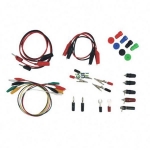
Trough, Electrodes, Probe, Connecting Leads, Graph Sheet or Mapping Board, and Accessories Depending on Model Design |
|
Required Accessories |
Low-Voltage DC Power Supply, Voltmeter or Multimeter, and Conducting Solution Depending on Experiment Setup |
|
Educational Use |
Physics Practical, Electricity Demonstration, Electrostatics Experiment, STEM Learning |
|
Suitable For |
Schools, Colleges, Physics Laboratories, STEM Classrooms, Science Exhibitions |
|
Learning Topics |
Equipotential Lines, Electric Field, Electric Potential, Voltage, Electrodes, Field Mapping, Potential Difference |
|
Operation |
Manual Measurement-Based Experiment with Low-Voltage Supply |
How to Use
- Place the Equipotential Trough Kit on a clean, flat, and stable laboratory table.
- Position the required electrodes inside the trough according to the experiment setup.
- Add a suitable conducting solution to the trough as recommended for the practical activity.
- Connect the electrodes to a low-voltage DC power supply using connecting leads.
- Connect a voltmeter or multimeter with the measuring probe to detect potential values.
- Select a reference electrode or reference point for voltage measurement.
- Move the probe gently through the conducting solution and note points with the same voltage reading.
- Mark equal-potential points on graph paper or a mapping sheet.
- Join the marked points to draw equipotential lines.
- Repeat the experiment with different electrode arrangements to compare electric field patterns.
- After use, switch off the power supply, remove the solution, clean the trough, dry all components, and store safely.
Safety and Handling Instructions
- Use only under the supervision of a teacher or trained laboratory instructor.
- Use a suitable low-voltage DC power supply for safe classroom operation.
- Do not touch electrical terminals with wet hands.
- Keep the power supply and electrical instruments away from spilled liquid.
- Do not overfill the trough with conducting solution.
- Switch off the power supply before changing electrodes or cleaning the apparatus.
- Clean and dry all components properly after use to prevent corrosion or damage.
- Store the kit in a clean, dry, and safe place.
Educational Applications
- Mapping equipotential lines around electrodes.
- Studying electric potential and voltage distribution.
- Demonstrating electric field patterns in a conducting medium.
- Understanding the relationship between equipotential lines and electric field lines.
- Comparing field patterns for point, plate, circular, and irregular electrodes.
- Practical study of electrostatics and electricity concepts.
- Useful for physics practicals, STEM projects, and science exhibitions.
Why Choose Scientifc Equipment Equipotential Trough Kit?
The Scientifc Equipment Equipotential Trough Kit is designed to make electric field mapping simple, practical, and visual. It helps teachers demonstrate electric potential and field distribution clearly, while students gain hands-on experience with measurement, observation, graph plotting, and analysis of equipotential patterns.
FAQ
- What is an Equipotential Trough Kit used for?
An Equipotential Trough Kit is used to map equipotential lines, study electric potential, observe voltage distribution, and understand electric field patterns in physics laboratories.
- Is this kit suitable for school laboratories?
Yes, the Equipotential Trough Kit is suitable for school physics labs, college laboratories, STEM classrooms, science projects, and teacher-led demonstrations.
- What are equipotential lines?
Equipotential lines are lines that join points having the same electric potential. No work is done in moving a charge along an equipotential line.
- What accessories are required with this kit?
A low-voltage DC power supply, voltmeter or multimeter, connecting leads, conducting solution, and graph paper may be required depending on the experiment setup.
- Can different electrode shapes be used?
Yes, different electrode shapes and arrangements can be used to compare how electric field and equipotential patterns change.
- What concepts can be taught using this kit?
This kit can be used to teach electric potential, equipotential lines, electric field direction, voltage gradients, potential difference, electrode behavior, and field mapping.
- How should the kit be maintained after use?
After use, switch off the power supply, empty the conducting solution, rinse the trough if required, dry the electrodes and accessories, and store everything in a clean, dry place.
SEO Keywords
Equipotential Trough Kit, Scientifc Equipment Equipotential Trough Kit, equipotential line apparatus, electric field mapping kit, physics lab equipotential apparatus, voltage distribution experiment kit, electrostatics field mapping equipment, school physics lab equipment, STEM electricity apparatus, educational science equipment.
SEO Meta Title
Equipotential Trough Kit – Scientifc Equipment Electric Field Mapping Apparatus
SEO Meta Description
Buy Equipotential Trough Kit by Scientifc Equipment for physics labs, STEM classrooms, and electrostatics demonstrations. Ideal for mapping equipotential lines, studying electric potential, voltage distribution, electric fields, and electrode patterns.
Google E-E-A-T Focused Content
This product content is prepared to support teachers, laboratory suppliers, educational institutions, students, and science buyers with clear product information, practical specifications, usage guidance, safety instructions, and helpful FAQs. The content focuses on accurate physics concepts, real classroom applications, safe laboratory handling, and trustworthy educational value to improve product clarity, user confidence, and search engine relevance.
.jpg)
.jpg)
.jpg)
.jpg)
.jpg)
 (1).png)
.jpg)