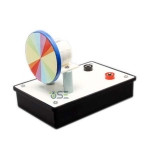
Student Transmission Gratings Manufacturer,Supplier and Exporter in India
.jpeg)
Product Code : SCL-PLE-11471
Scientifc Equipment Student Transmission Gratings are educational optics laboratory accessories designed to demonstrate diffraction, interference, wavelength separation, spectral lines, visible spectrum formation, and the wave nature of light. They are suitable for school science laboratories, college physics labs, STEM classrooms, optics practicals, spectroscopy lessons, and teacher-led demonstrations.
These transmission gratings allow light to pass through many closely spaced parallel lines or grooves. As light passes through the grating, it spreads into different directions and forms diffraction patterns or spectra. Students can use them to observe colour separation, compare different light sources, and understand how light behaves as a wave.
Product Description
The Student Transmission Gratings by Scientifc Equipment are practical student-use optics components for classroom experiments on diffraction and spectrum observation. They generally consist of transparent grating film, plastic-mounted grating, slide-mounted grating, or card-mounted grating as per supplied model configuration.
When a beam of white light, monochromatic light, or suitable classroom light source passes through the grating, the grating separates the light into diffraction orders. White light produces coloured spectra, while single-colour light sources produce separated bright bands or spots. This makes the product useful for teaching diffraction, interference, wavelength, visible spectrum, light source comparison, and spectroscopy basics.
Scientifc Equipment Student Transmission Gratings are designed for hands-on optics learning and help students connect textbook wave optics concepts with real visual observations.
Key Features
- Brand: Scientifc Equipment
- Student-Friendly Gratings: Designed for supervised classroom and laboratory optics experiments.
- Transmission Design: Allows light to pass through the grating for diffraction and spectrum observation.
- Wave Optics Demonstration: Helps explain diffraction, interference, and wavelength separation.
- Visible Spectrum Study: Useful for observing colour separation from white light sources.
- Light Source Comparison: Supports comparison of spectra from LED, fluorescent, incandescent, and discharge lamps.
- STEM Learning Tool: Encourages observation-based learning in optics and spectroscopy.
- Reusable Educational Accessory: Suitable for repeated supervised student practical work when handled carefully.
Product Specifications
|
Product Name |
Student Transmission Gratings |
|
Brand |
Scientifc Equipment |
|
Product Type |
Educational transmission diffraction grating / optics experiment accessory |
|
Primary Use |
Demonstrating diffraction, interference, visible spectrum, wavelength separation, and spectral patterns |
|
Working Principle |
Light passing through closely spaced grating lines spreads into diffracted beams, producing interference patterns and spectra |
|
Grating Type |
Transmission diffraction grating as per supplied model configuration |
|
Material |
Optical film, plastic, glass, acrylic, or suitable transparent grating material as per supplied configuration |
|
Mounting Style |
Film sheet, slide mount, card mount, plastic mount, or holder-mounted format as per supplied configuration |
|
Compatible Light Sources |
White light source, LED lamp, fluorescent lamp, incandescent lamp, spectral lamp, discharge tube, or low-power laser under supervision |
|
Compatible Accessories |
Optical bench, ray box, slit, light source, screen, meter scale, stand, clamp, spectroscope, spectrometer, and laboratory worksheet |
|
Subject Use |
Physics, optics, wave optics, spectroscopy basics, light experiments, and STEM education |
|
Demonstration Topics |
Diffraction, interference, wavelength, visible spectrum, spectral lines, diffraction orders, light dispersion, and wave nature of light |
|
Application |
Classroom demonstrations, school practicals, college physics labs, optics experiments, STEM projects, spectroscopy introduction, and science fair activities |
|
Suitable For |
Schools, colleges, physics laboratories, science laboratories, optics labs, STEM labs, and educational institutions |
|
Usage Mode |
Teacher-led demonstration and supervised student practical use |
|
Packaging |
Standard educational laboratory supply packaging or protective sleeve as per supplied configuration |
How to Use Student Transmission Gratings
- Place the Student Transmission Grating on a clean, dry, and stable laboratory table.
- Handle the grating carefully from the edges to avoid fingerprints, scratches, or damage to the optical surface.
- Set up a suitable light source such as a white light lamp, LED source, discharge tube, spectral lamp, or low-power laser under teacher supervision.
- Hold or mount the grating in front of the light source so that light passes through it.
- Place a white screen or observation surface at a suitable distance to view the diffraction pattern or spectrum.
- Align the grating and light source carefully until the central image and side spectra are clearly visible.
- Observe the central bright region and the diffraction orders formed on both sides.
- Compare patterns from different light sources and note changes in colour bands or spectral lines.
- For wavelength activities, measure the distance between diffraction orders using a scale and calculate wavelength as guided by the teacher.
- Record observations, diagrams, colour order, spectral line position, and conclusions in the practical notebook.
- After use, switch off the light source and store the grating safely in its protective cover or sleeve.
Educational Applications
- Demonstrating diffraction of light
- Studying interference patterns and diffraction orders
- Observing visible spectrum formation from white light
- Comparing spectra from different light sources
- Introducing wavelength measurement in optics practicals
- Teaching wave nature of light through practical observation
- Supporting spectroscopy and spectrum analysis lessons
- Using with optical benches, lamps, screens, slits, and worksheets
- Supporting STEM projects, science fair experiments, and classroom demonstrations
Why Choose Scientifc Equipment Student Transmission Gratings?
Scientifc Equipment provides practical educational science apparatus and optics accessories for schools, colleges, STEM labs, and institutional laboratory setups. Student Transmission Gratings help learners understand diffraction, interference, spectrum formation, and wave optics through direct hands-on experiments.
- Suitable for school and college physics laboratories
- Useful for optics, wave optics, diffraction, and spectroscopy demonstrations
- Student-use format supports individual or group practical learning
- Helps students observe light separation and diffraction patterns clearly
- Compatible with common classroom light sources and optical accessories
- Supports practical understanding of wavelength and spectral behaviour
- Suitable for institutional procurement and science lab setup
E-E-A-T Product Trust Notes
- Educational Experience: Designed for repeated classroom use in diffraction, interference, spectrum, and wave optics experiments.
- Practical Expertise: Supports standard physics concepts such as wavelength, diffraction orders, spectral lines, and interference patterns.
- Authoritative Lab Use: Suitable for school, college, STEM, physics, optics, and spectroscopy practicals.
- Trustworthy Learning: Encourages safe, supervised, observation-based learning with clear optical outcomes.
Care and Safety Instructions
- Use Student Transmission Gratings only under teacher or laboratory instructor supervision.
- Do not look directly into a laser beam or strong light source while using the grating.
- Use only safe classroom light sources and low-power laser sources where permitted.
- Handle gratings from the edges to avoid fingerprints and scratches on the optical surface.
- Do not bend, press, rub, or wipe the grating surface roughly.
- Keep gratings away from dust, moisture, corrosive chemicals, and excessive heat.
- Store gratings in a protective sleeve, cover, or box after use.
- Do not use cracked, scratched, or damaged gratings for accurate observations.
- Clean only as recommended for the supplied material and avoid harsh chemicals.
SEO Title
Student Transmission Gratings for School Physics Optics Lab – Scientifc Equipment
Meta Description
Buy Scientifc Equipment Student Transmission Gratings for school physics labs, STEM classrooms, optics experiments, diffraction demonstrations, interference patterns, visible spectrum study, wavelength activities, and spectroscopy learning.
SEO Keywords
Student Transmission Gratings, Scientifc Equipment Transmission Gratings, School Lab Diffraction Grating, Physics Lab Transmission Grating, Student Diffraction Grating, Educational Transmission Grating, Wave Optics Apparatus, Spectrum Demonstration Grating, STEM Optics Equipment, Spectroscopy Teaching Tool.
FAQ – Student Transmission Gratings
- What are Student Transmission Gratings used for?
Student Transmission Gratings are used to demonstrate diffraction, interference, spectrum formation, wavelength separation, spectral lines, and the wave nature of light.
- Are these gratings suitable for school laboratories?
Yes, Scientifc Equipment Student Transmission Gratings are suitable for school science labs, college physics labs, STEM classrooms, optics practicals, and supervised student experiments.
- What is a transmission grating?
A transmission grating is an optical grating that allows light to pass through closely spaced lines or grooves, producing diffraction patterns and spectra.
- Which physics concepts can be taught using these gratings?
They can be used to teach diffraction, interference, wavelength, visible spectrum, spectral lines, diffraction orders, and wave behaviour of light.
- Can these gratings be used with white light?
Yes, white light can be used to observe coloured spectra because different wavelengths diffract at different angles.
- Can Student Transmission Gratings be used with a laser?
Yes, a suitable low-power laser may be used under teacher supervision to observe clear diffraction spots or orders. Direct viewing of laser light must be avoided.
- Do transmission gratings require electricity?
The gratings themselves do not require electricity. The light source used with them may require electrical power depending on the experiment setup.
- Can students use the gratings directly?
Students can use them under teacher or laboratory instructor supervision after learning correct handling, alignment, and optical safety methods.
- What accessories are useful with Student Transmission Gratings?
Useful accessories include a light source, optical bench, slit, screen, stand, clamp, meter scale, spectroscope, spectrometer, and practical worksheet.
- Can these gratings help compare different light sources?
Yes, they can help compare spectra from white light, LED lamps, fluorescent lamps, incandescent lamps, spectral lamps, and discharge tubes.
- What safety precautions should be followed?
Do not look directly into laser beams or strong light sources, handle the grating carefully, avoid scratching the surface, and store it safely after use.
- How should Student Transmission Gratings be maintained?
Keep them clean, dry, and protected from scratches. Store them in a cover or sleeve and avoid touching or rubbing the grating surface.
- Are Student Transmission Gratings useful for STEM education?
Yes, they support STEM education by helping students observe diffraction, interference, spectra, and wavelength behaviour through hands-on optics experiments.
Conclusion
Scientifc Equipment Student Transmission Gratings are valuable educational optics accessories for teaching diffraction, interference, visible spectrum formation, wavelength separation, and the wave nature of light. Their student-friendly format, practical demonstration value, and compatibility with classroom light sources make them suitable for school laboratories, college physics labs, STEM classrooms, optics practicals, spectroscopy lessons, science projects, and institutional science lab setups.
.jpg)
.jpg)
.jpg)
.png)